New Zealand Ahead of Historic U18 World Championship Debut: Captain Reuben McKeown Talks Motivation, Challenges and Big Ambitions
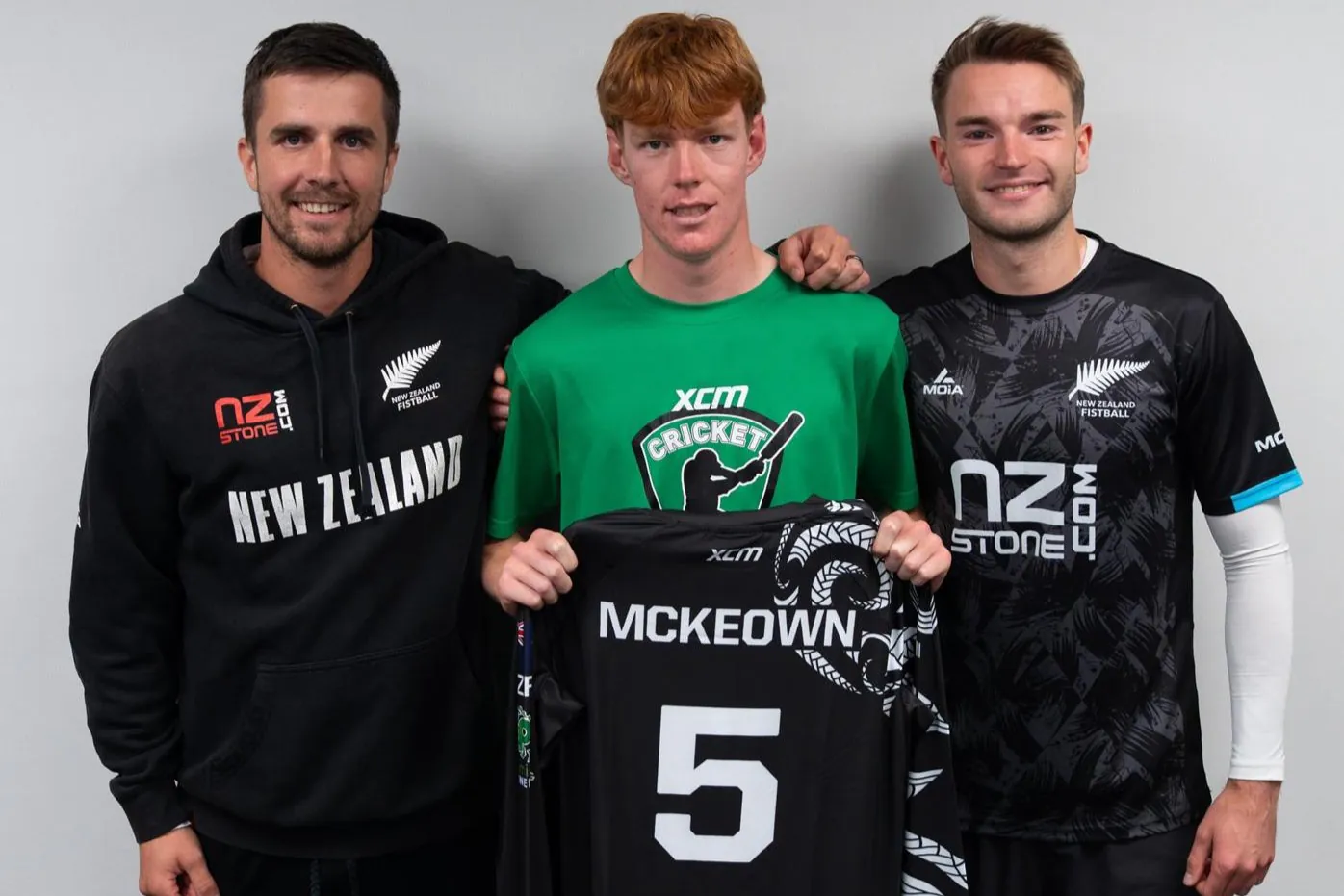
New Zealand is competing in an U18 Fistball World Championship for the very first time. The tournament will take place from 23–26 July 2026 in Reiden, Switzerland. Leading this pioneering New Zealand squad is captain Reuben McKeown – alongside the coaches, he is the tactical mastermind and the emotional leader on the pitch. We spoke to him about this momentous debut.
The historic moment: New Zealand is taking part in a U18 Fistball World Championship for the very first time. How did it feel when you held the official confirmation of your participation in your hands?
Reuben: Yeah it was honestly an amazing moment and seeing the official certificate made it all feel real, that this was actually happening. Being the first time NZ has had a team in the U18 World Champs and a majority of our players only picking up the sport towards the end of 2025 means we may be at a bit of a disadvantage to other teams who have won comps and players who have been playing for most of their lives. This just pushes us to work even harder, as we know there is a lot of catching up for us to do, any spare time has quickly turned into extra training, researching, and analysing. It’s pretty unreal to be able to represent your country so obviously a lot of excitement and pride, along with a strong sense of motivation to make the most of the opportunity.
Fistball vs. Rugby: New Zealand is world-famous for rugby. How do you explain to your friends back home what makes fistball so fascinating, and why the ball should be played with the arm and fist rather than with the foot or hand?
While rugby is a huge part of NZ’s culture, many people do play multiple sports, so when explaining this new game to them I link it to sports they may be familiar with such as volleyball and tennis. Due to Fistball being played on a larger court than volleyball, although there is one bounce allowed, there is a lot of ground to cover on defence so there are always plenty of dives making for an intense game, similar to rugby. For anyone who enjoys rugby I’m sure they would also love fistball, as it has many similarities such as teamwork, positioning, game awareness, communication, strategy, structure, fitness, agility, and skills.
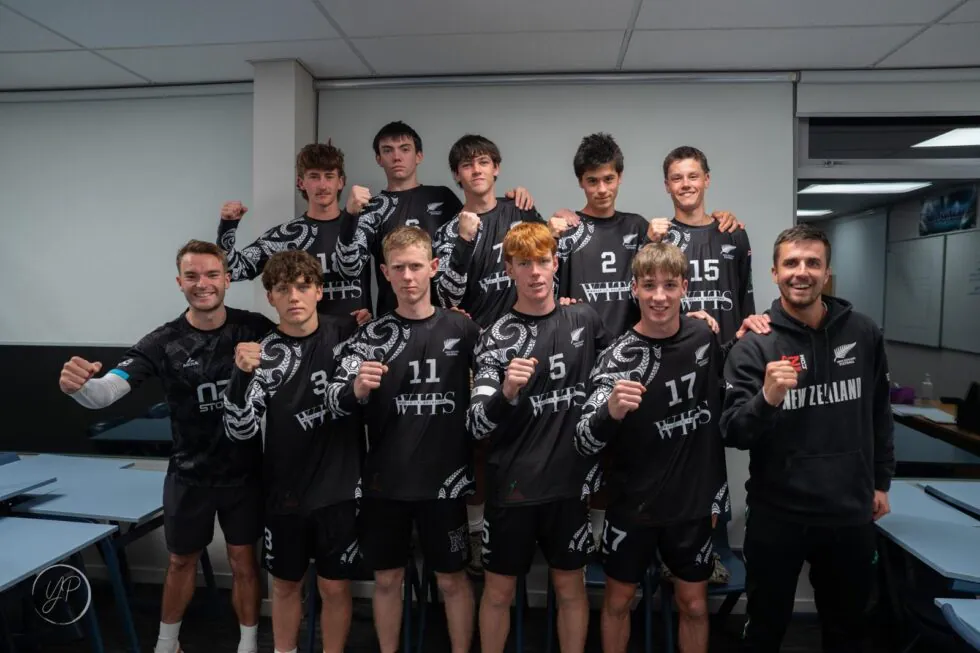
Preparation: The major fistball nations are based in Europe and South America. What do your training sessions in New Zealand look like to prepare you for the international level?
We train 3x weekly as a team, usually focusing a lot on the basics before moving onto specific drills and finishing with games. Outside of these trainings we are also working hard in our own time, not just on our fistball but also on fitness, as that will be very important when it comes to big tournaments. Although we are on the other side of the world from many of our competitors, we are extremely lucky to have many of the men’s players from the national team helping us out at trainings, a particularly big shoutout to coach Sam Kempf, who has put countless hours into developing us young fistballers as we prepare for U18 world champs.
Expectations: You are the big unknowns in the tournament. Do you see yourselves more as learners, or is your aim to give the established nations like Germany, Austria, Brazil or the host nation Switzerland a bit of a run for their money?
I think it’s a bit of both. We know we’re still developing, so there’s a lot to learn, but at the same time we’re not going over there for a holiday. We want to compete, challenge teams, and show we can push those top nations if we play our best.
The greatest strength: If you had to describe your team in three words – what would they be, and why do they make you a dangerous force on the court?
Developing, determined, improving. We know we’ve got ground to make up, but we’re working hard and getting better each time we play. That progress makes us dangerous because we’re constantly closing the gap.
Logistical hurdles: The journey from New Zealand is extremely long. What are your plans for dealing with jet lag and the transition to the European summer, so that you’re in peak condition right on time for kick-off?
It’s definitely going to be a big adjustment, so we’re going to have to try to get ahead of it by shifting our sleep before we leave and being really disciplined on the flight. Once we arrive, it’s about getting straight onto local time with sunlight, light training, and no long naps. Luckily we spend some time training in Germany before the competition, so hopefully we can use this time to get used to the European conditions and let our bodies adjust. If we nail sleep, hydration, and recovery early, we’ll be ready to go by game time.
Personal development: What was the biggest adjustment for you personally when you started playing fistball at a competitive level?
I feel the biggest adjustment was how precise everything has to be at speed, sometimes with very little time to react. You can’t just rely on power, every touch needs control and purpose. Getting used to making good decisions under pressure was the biggest step up.
The future of the sport: What impact do you hope your World Cup participation will have on the profile of fistball in New Zealand? Are there plans to further develop the sport there after your return?
I hope it helps put fistball on the map a bit more in New Zealand and shows people it’s a legit international sport. Just being at a World Cup should create more interest and hopefully bring new players in from all around New Zealand. After we’re back, the goal is definitely to build on that, grow the game, get more exposure, and make it bigger than it is now.
Taking stock: You returned from Australia a few days ago after your first international tournament. What lessons have you learnt from your first competitive matches?
Getting to play against some strong teams in Australia really showed us the level of competition there is out there and the talent that is present in both New Zealand and Aus. As a team I feel our biggest learnings were how important communication and staying composed is, especially in tight moments where you have to be fully focused. Overall, it showed us the standard we need to reach and what we have to improve before the World Championships. Getting to watch the top men’s teams go head to head was also a highlight of the weekend which really opened our eyes to the next level of fistball.
We are lucky that NZ is quite a small country with strong communities who support us, such as Timaru Boys High School providing facilities for us to train on and local businesses such as WITS and Phimister engineering, supporting with funding needs.
Thank you very much for your interesting comments. We wish you and the whole team a wonderful time in Europe and are sure you’ll return to New Zealand with lots of great memories and new friends!